A collaboration is ongoing with the international ENIGMA consortium, in which the IMAGEMEND PIs lead several working groups, and which has already resulted in a first joint paper in Nature (Hibar et al., 2015):


An international study, which included many researchers from IMAGEMEND, has identified several new genes that influence the size of our brain. Prof. Barbara Franke from Radboudumc in Nijmegen, work package leader in IMAGEMEND, is one of the senior authors of the paper, which appeared in Nature on January 22 2015, and in which 193 different institutes from around the world took part.


The published study is unique, as brain scans of over 30.000 participants were analysed. ‘We have identified genetic factors that help us to better understand the differences in brain development that exist between people’ says Franke, who is a co-founder of the ENIGMA Consortium (www.enigma.ini.usc.edu), the initiator of the published study. ‘We founded ENIGMA in 2009, with the idea of creating an environment, in which researchers across the entire world could easily work together on the genetics of brain structure. This worked excellently, as we use a ‘crowd-sourcing’ approach, in which we develop protocols for analysis centrally, and then send them out to all participating groups, which thus can perform their analysis themselves. So rather than collecting original data from the participating groups, we only ask them to send us their results, which we subsequently combine. In this way, all groups can stay closely involved in a project’.


The ENIGMA studies can be expected to provide more insight into the causes and mechanisms underlying different brain disorders. ENIGMA is currently comparing their results to those of genetics research of brain disorders. In this way, data of more than 70.000 research participants is being studied. Results of this research can be expected later this year.



Images of the human brain:


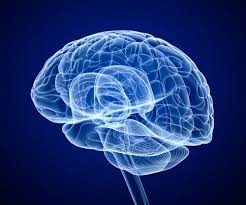
Figure 1:  Sagittal view of the human brain


 Figure 2: 3D clear view of the brain


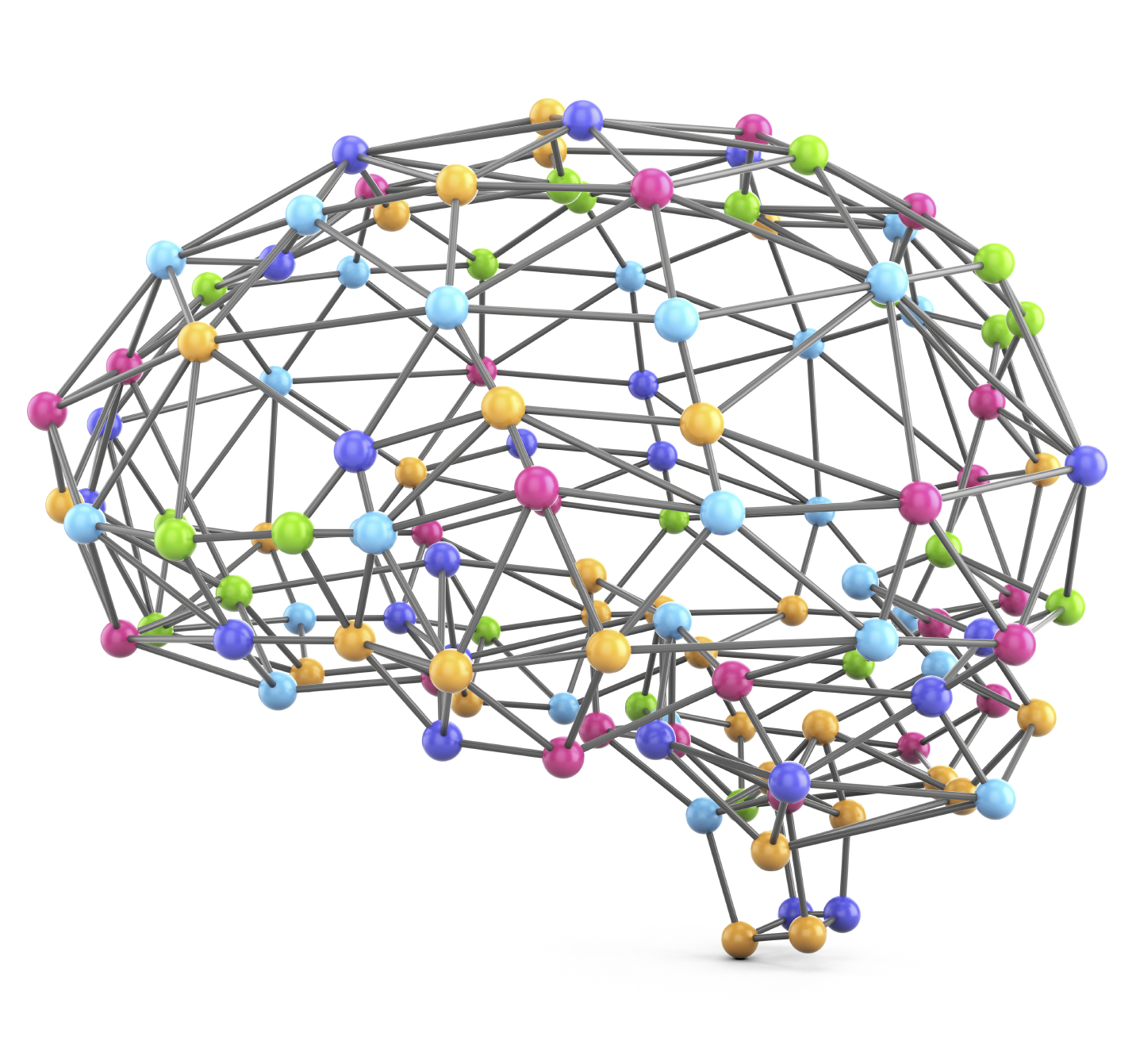
Figure 3: Artitistic rendering of the concept of brain connectivity as this is not a data based model


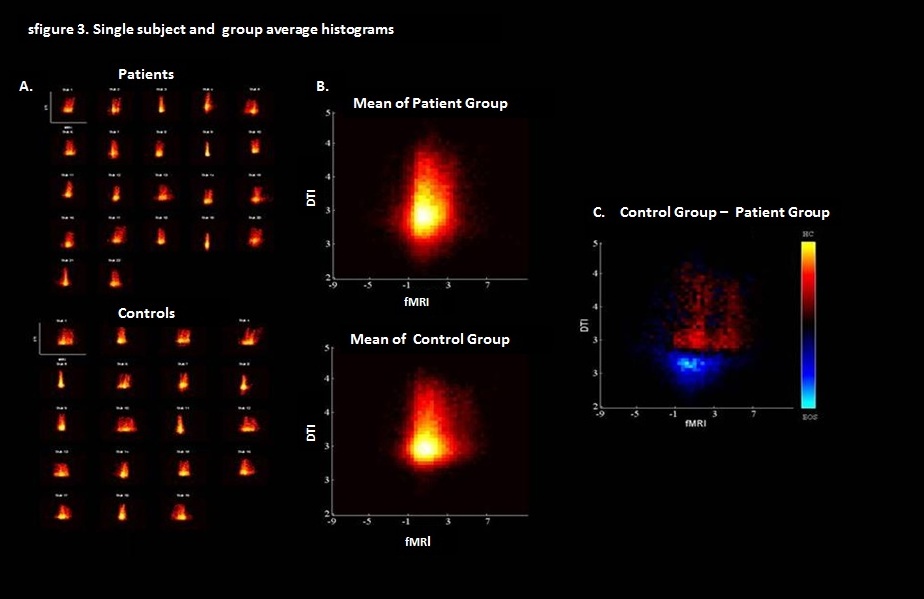
Figure 4: Single subject and group average histograms

  • Apa. 2000. Diagnostic and Statistical Manual of Mental Disorders, Fourth Edition, Text Revision. Text. Vol. Washington. American Psychiatric Association.
  • Addington, Anjené M, and Judith L Rapoport. 2011. “Annual Research Review: Impact of Advances in Genetics in Understanding Developmental Psychopathology.” The Journal of Child Psychology and Psychiatry and Allied Disciplines 5 (5): 510–518.
  • Buckholtz, J. W. and A. Meyer-Lindenberg (2012). "Psychopathology and the human connectome: toward a transdiagnostic model of risk for mental illness." Neuron 74(6): 990-1004.
  • Cardno, A G, E J Marshall, B Coid, A M Macdonald, T R Ribchester, et al. 1999. “Heritability Estimates for Psychotic Disorders: The Maudsley Twin Psychosis Series.” Archives of General Psychiatry 56 (2): 162–168.
  • Esslinger, C., H. Walter, P. Kirsch, S. Erk, K. Schnell, C. Arnold, L. Haddad, D. Mier, C. Opitz von Boberfeld, K. Raab, S. H. Witt, M. Rietschel, S. Cichon and A. Meyer-Lindenberg (2009). "Neural mechanisms of a genome-wide supported psychosis variant." Science 324(5927): 605.
  • Faraone, SV, J Biederman, and E Mick. 2006. “The Age-dependent Decline of Attention Deficit Hyperactivity Disorder: a Meta-analysis of Follow-up Studies.” Psychol Med 36 (2): 159–65.
  • Faraone, SV, RH Perlis, AE Doyle, JW Smoller, JJ Goralnick, et al. 2005. “Molecular Genetics of Attention-deficit/hyperactivity Disorder.” Biol Psychiatry 57 (11): 1313–23.
  • Hyman, Steven E. 2010. “The Diagnosis of Mental Disorders: The Problem of Reification.” Ed. NolenHoeksema S And Cannon Td And Widiger T. Annual Review of Clinical Psychology 6 (December 2009): 155–179.
  • Insel, Thomas, Bruce Cuthbert, Marjorie Garvey, Robert Heinssen, Daniel S Pine, et al. 2010. “Research Domain Criteria (RDoC): Toward a New Classification Framework for Research on Mental Disorders.” The American Journal of Psychiatry 167 (7): 748–751.
  • Kendler, K S, M McGuire, A M Gruenberg, A O’Hare, M Spellman, and D Walsh. 1993. “The Roscommon Family Study. I. Methods, Diagnosis of Probands, and Risk of Schizophrenia in Relatives.” Archives of General Psychiatry 50 (7): 527–540.
  • Kendler, K. S. (2013). What psychiatric genetics has taught us about the nature of psychiatric illness and what is left to learn. Molecular psychiatry, 18(10), 1058–66. doi:10.1038/mp.2013.50
  • Kieseppä, Tuula, Timo Partonen, Jari Haukka, Jaakko Kaprio, and Jouko Lönnqvist. 2004. “High Concordance of Bipolar I Disorder in a Nationwide Sample of Twins.” The American Journal of Psychiatry 161 (10): 1814–1821.
  • Krueger, R.F., and K.E. Markon. 2011. “A Dimensional-spectrum Model of Psychopathology: Progress and Opportunities.” Archives of General Psychiatry 68: 10–11.
  • Linden, D. E. J. (2012). The Challenges and Promise of Neuroimaging in Psychiatry. Neuron, 73(1), 8–22.
  • Meyer-Lindenberg, A. (2010). "From maps to mechanisms through neuroimaging of schizophrenia." Nature 468(7321): 194-202.
  • Purcell, Shaun M, Naomi R Wray, Jennifer L Stone, Peter M Visscher, Michael Conlon O’Donovan, et al. 2009. “Common Polygenic Variation Contributes to Risk of Schizophrenia and Bipolar Disorder.” Nature 460 (7256): 748–752.
  • Schwarz, E., NJ. VanBeveren, PC. Guest, R. Izmailov, and S. Bahn. 2011. “The Application of Multiplexed Assay Systems for Molecular Diagnostics.” Int Rev Neurobiol. 101: 259–78.
  • Schwarz, E, PC Guest, J Steiner, B Bogerts, and S Bahn. 2012. “Identi?cation of Blood-based Molecular Signatures for Prediction of Response and Relapse.pdf.” Transl Psychiatry 2 (e82).
  • Todd, R D. 2000. “Genetics of Attention Deficit/hyperactivity Disorder: Are We Ready for Molecular Genetic Studies?” American Journal of Medical Genetics 96 (3): 241–243.
  • Wittchen, Hans-Ulrich, and Frank Jacobi. 2005. “Size and Burden of Mental Disorders in Europe--a Critical Review and Appraisal of 27 Studies.” European Neuropsychopharmacology the Journal of the European College of Neuropsychopharmacology 15 (4): 357–376.
  • Wittchen, H U, F Jacobi, J Rehm, A Gustavsson, M Svensson, B Jönsson, J Olesen, et al. 2011. “The Size and Burden of Mental Disorders and Other Disorders of the Brain in Europe 2010.” European Neuropsychopharmacology the Journal of the European College of Neuropsychopharmacology 21 (9): 655–679. http://www.ncbi.nlm.nih.gov/pubmed/21896369.